


If there is anything positive from a business point of view in the current coronavirus pandemic, and I’m clutching at straws here, it’s that you would never normally get the chance to slow your business down, step back and look at every aspect.
Our event focused sector of the business stalled overnight, just as we were entering the busiest period of the year. Months of planning, resource training and equipment purchase stopped. With every event cancelled for the foreseeable future we had no choice but to furlough staff and put the events part of the business on a temporary hold.
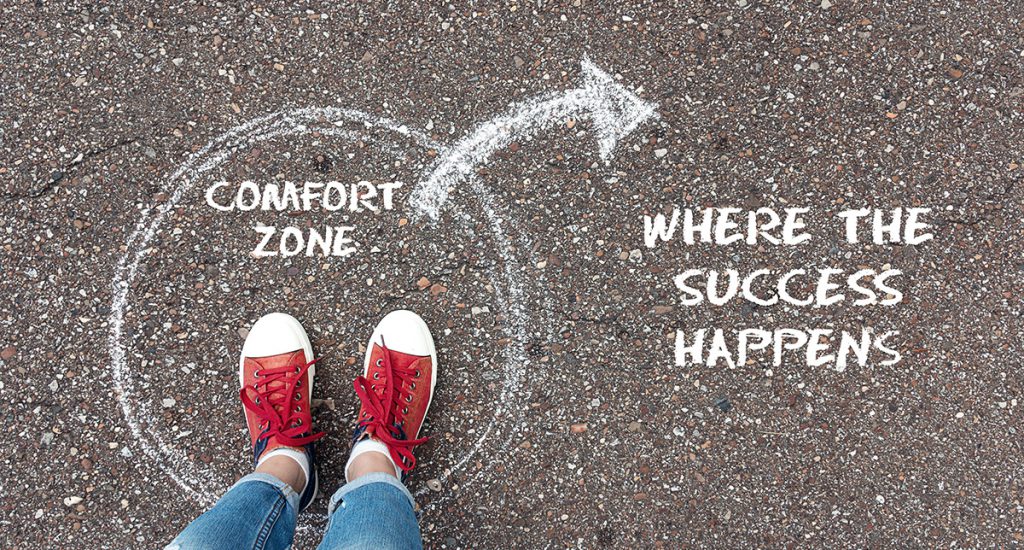
Once we were over the initial shock it dawned on us that, albeit unexpectedly forced on us, the opportunity was there to reassess key aspects of our business — structure, systems, equipment, roles and responsibilities and even our focus areas — without the challenge of doing it in parallel whilst operating the business at full stretch as would normally be the case at this time of year.
In the current situation the old saying ‘necessity is the mother of invention’ has never been truer, especially when it comes to driving down recurring costs, creating solutions to some of the challenges that face our event customers when they return and identifying new revenue opportunities.
Optimise
For us internally this has led to a move to a new transformative CRM and job management system which is not only more cost-effective but further integrates key systems such as budget reporting, requirements, equipment management and resource management, along with an improved bi-directional link to our accounting system. This has reduced duplicate work, provides a single system of record and enables us to give external freelancers access to key information in a much better way.
To try and make this change normally would have been incredibly difficult whilst running the business at 100% with hundreds of jobs mid-flow. This initial change will also enable us to develop more automated functions around our new ‘core’, helping us record, manage, monitor, report and share information effectively both internally and with our customers.
We’ve also had time to look at our organisation and consider what we need to plan for going forward, not just because of the impact of coronavirus but also in general as the business matures and develops. It’s too easy to carry on doing what you have been doing because it has ‘always been that way’ when actually things have changed and evolved. With so much opportunity to automate tasks and workflows staff roles can be redefined to match the needs going forward.
New Technology
We hold lots of rental equipment and managing its lifespan is important from a cost and technical point of view. The time is right now to assess the technical roadmap and work out where to invest. Normally this is more of an evolutionary process but with the enforced gap it can be more revolutionary, looking further into the future for where we need to be.
More broadly the pandemic is driving changes that will most likely become permanent. For example, in the event sector the move to cashless/contactless has been progressing slower than in high street retail for several reasons, partly because cash was seen as an easy, known quantity and cashless was seen as more complex. Coronavirus has changed that and cash is no longer attractive, with the future looking 100% contactless. The customer now expects contactless everywhere which drives different requirements for delivery at events.
In a similar way ‘traceability’ has become a big topic so that events can show they are in control of who attended, when they were there and possibly even who they were close to. This requires tying together several systems — ticketing, entrance/exit scanning, on-site location and historical reporting — in a way which would have been deemed an invasion of privacy until recently but now may be a requirement for the event to run.
New Directions
For many event companies the big shock in all of this was the realisation that their entire business model revolved around people being physically together. We work across many diverse event segments — festivals, sports, exhibitions, conferences, trade shows, etc. but they all require physical attendees — something no one expected could be taken away so quickly and completely.
There has been much talk of the pivot to virtual events and although virtual events will take a bigger role going forward they will not replace the desire for people to meet and share common experiences in person. After a period of time I am sure we will see a lot more around hybrid events, mixing both a physical and virtual element to extend audiences and also provide some risk mitigation for what could be an ongoing cycle of restrictions.
Events of all sorts – music, sport, e-sports, culture, etc – for many are a key part of mental well-being, a subject which needs far more focus. The event sector has a part to play in the recovery and I’ve heard some great discussions around using events to bring communities back together, ranging from small local events to distributed global events linked to sporting tournaments. New formats and approaches which probably would not have been considered before the current situation transpired.
For companies like ours who have, to date, predominantly provided services for physical events the big discussion is around risk mitigation and diversification in the future. We are not moving away from physical events, we are continuing to introduce additional services to assist the operation of events in the new environment but that is coupled with a bigger focus on parallel services which are less reliant on the physical gathering.
Coronavirus has hit the events industry particularly hard but it is these pressures which drive innovation and over the next year or two we could see some interesting disrupters as we all plot a new course.

 It has been a busy few weeks. Having left the event organiser world a few weeks ago, it has been fascinating to see what life is like on ‘the other side of the fence’ in the supplier world.